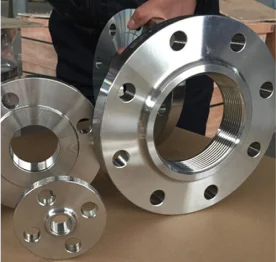
The performance and durability of girth flanges depend significantly on the materials used and the manufacturing processes employed. This article delves into the various materials and advanced manufacturing techniques that are used to produce high-performance girth flanges.
Common Materials for Girth Flanges
Carbon Steel
Widely used due to its strength and affordability, carbon steel girth flanges are suitable for applications where high pressure and temperature are not extreme.
Stainless Steel
Known for its corrosion resistance and strength, stainless steel is ideal for harsh environments and applications involving corrosive substances.
Alloy Steel
Alloy steel girth flanges offer enhanced strength and resistance to wear and tear, making them suitable for high-stress applications.
Non-Metallic Materials
In some specialized applications, non-metallic materials like PVC and fiberglass are used for their resistance to chemicals and non-conductivity.
Advanced Manufacturing Processes
Forging
Forging involves shaping metal using compressive forces, resulting in strong and durable girth flanges. This process enhances the mechanical properties of the material, making it ideal for high-pressure applications.
Casting
Casting involves pouring molten metal into a mold to create the desired shape. While casting can produce complex shapes, it may not offer the same level of strength as forging.
Machining
Precision machining is used to achieve tight tolerances and specific dimensions in girth flanges. CNC machining ensures consistency and accuracy in production.
Welding
For some large or custom girth flanges, welding is used to join different sections. Advanced welding techniques ensure strong, leak-proof joints.
Quality Control and Testing
To ensure the reliability and performance of girth flanges, rigorous quality control and testing procedures are implemented. This includes:
- Material Testing: Verifying the composition and properties of the materials used.
- Dimensional Inspection: Ensuring that the girth flanges meet precise dimensional specifications.
- Pressure Testing: Subjecting girth flanges to high-pressure conditions to test their integrity.
- Non-Destructive Testing (NDT): Techniques like ultrasonic testing and radiography are used to detect internal flaws without damaging the girth flange.
Innovations in Girth Flange Manufacturing
The field of girth flange manufacturing is continuously evolving with innovations such as:
- 3D Printing: Additive manufacturing allows for the creation of complex, custom girth flanges with reduced lead times.
- Advanced Alloys: Development of new alloy compositions to enhance performance in extreme conditions.
- Surface Treatments: Techniques like coating and plating to improve corrosion resistance and wear properties.
In conclusion, the materials and manufacturing processes used in the production of girth flanges significantly impact their performance and durability. Understanding the advantages and applications of different materials — such as carbon steel, stainless steel, and advanced alloys — helps in selecting the right girth flange for specific needs. Advanced manufacturing techniques like forging, casting, machining, and welding ensure high-quality girth flanges that meet stringent industry standards.